Everything About Ceıvır in One Place
Introduction
Language constantly evolves as people adapt words and expressions to fit changing communication habits. One term that has recently sparked curiosity is Ceıvır, a word appearing in discussions around language, translation, internet culture, and digital communication. While many people first encounter it online and wonder whether it is a typo, trend, or brand, the reality is much more interesting. Understanding its roots and modern usage reveals how language changes through technology and global interaction.
Understanding the Origin of the Term
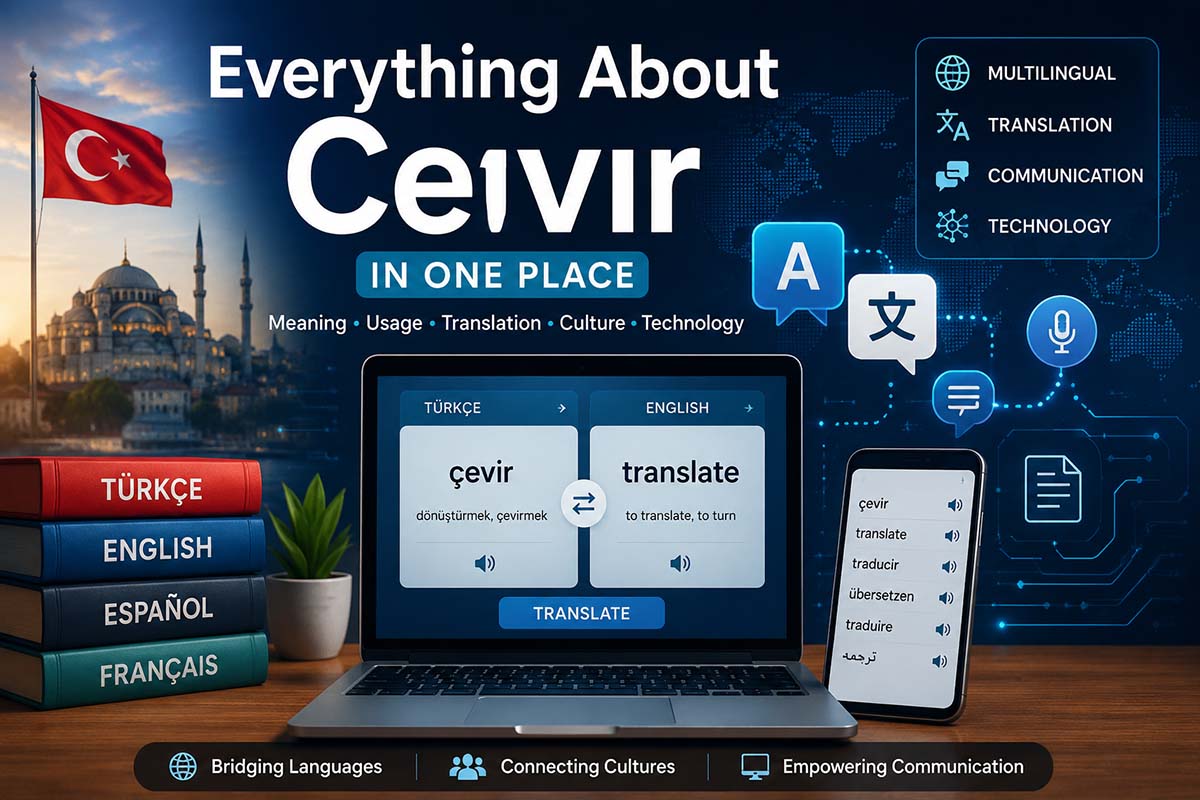
The word is widely linked to the Turkish verb “çevir,” which generally means “turn,” “translate,” or “convert.” Over time, spelling adaptations appeared online because many keyboards and systems do not easily support Turkish characters. As a result, alternate spellings became common in digital spaces. Research and language-focused discussions suggest that internet users gradually adopted stylized versions, creating broader interest around the term. (Wisp Willow)
Language adaptation is nothing new. Across the world, people regularly simplify spellings when typing on mobile devices or using keyboards designed for other languages.
Examples include:
- Removing accent marks
- Replacing regional characters
- Creating shorthand expressions
- Adapting words for social media use
- Simplifying pronunciation-based spelling
This process helps explain why terms evolve online faster than in traditional dictionaries.
The Evolution of Digital Language
The internet has dramatically changed how people write and communicate. Social media platforms, messaging applications, and search engines encourage speed and simplicity.
In earlier decades, language changes often took years or generations. Today, online communities can popularize a variation in weeks.
Several factors influence digital language evolution:
Technology Accessibility
Not every device supports regional characters equally. Users often replace unique letters with simpler alternatives.
Social Media Trends
Platforms reward short, memorable wording. Unique spellings frequently attract more attention.
Global Communication
People from different countries interact daily, leading to blended language styles.
Search Behavior
Users commonly type words in the quickest way possible, even if spelling becomes altered.
These changes explain why language-related terms often gain new forms online.
Why Translation and Conversion Matter Today
Many discussions surrounding the term connect it with translation and transformation concepts. This connection reflects a broader shift in global communication.
Modern society depends heavily on conversion processes:
- Translating languages
- Converting file formats
- Transforming speech into text
- Adapting content across cultures
- Reformatting information for multiple devices
Translation itself has become one of the most important functions in the digital world.
Businesses, students, travelers, and content creators all rely on tools that remove communication barriers.
The rise of multilingual interaction has increased demand for efficient translation systems and language-learning tools. Sources discussing the concept consistently connect it with accessibility and communication across cultures. (Verse Magazine)
The Relationship Between Language and Technology
Language and technology now influence one another more than ever before.
Decades ago, technology adapted to language. Today, language also adapts to technology.
Consider a few examples:
Messaging Culture
Texting shortened many expressions:
- “You” became “u”
- “Before” became “b4”
- Emojis replaced words
Voice Technology
Speech assistants changed how people phrase searches.
Instead of typing:
“weather Karachi”
Users increasingly say:
“What is the weather in Karachi today?”
Artificial Intelligence
AI translation systems now process:
- text
- audio
- video
- live conversations
- documents
This creates entirely new communication patterns.
Language researchers increasingly examine how internet environments reshape words and meaning.
Cultural Influence Behind Modern Expressions
Digital language trends rarely happen randomly.
Culture plays a major role.
Online communities create identity through language. Specific words often become markers of belonging.
People may use stylized terms because they:
- reflect internet culture
- signal community participation
- express creativity
- stand out online
- create memorable branding
Some analyses suggest that newer forms connected to Turkish-rooted terminology have evolved into broader symbols of adaptation and creativity in internet spaces. (ceivir.pages.dev)
This demonstrates how language can move beyond strict definitions.
Words often gain emotional or cultural meaning over time.
Language Learning in the Digital Era
Students today learn languages differently than previous generations.
Traditional methods focused heavily on:
- grammar books
- memorization
- classroom repetition
Modern learners use:
- interactive apps
- AI tutors
- translation tools
- online communities
- video-based learning
Because of this shift, words connected to translation and conversion naturally attract more attention.
Learners increasingly search for terms they encounter online, even if those words originated informally.
This reflects a larger educational trend: curiosity-driven learning.
Instead of waiting for formal instruction, users independently research language questions.
Real-World Examples of Word Adaptation
Language history contains many examples of transformed expressions becoming mainstream.
Examples include:
Originally written as “electronic mail.”
Today nearly everyone uses the shortened form.
Blog
Derived from “web log.”
Eventually shortened and universally adopted.
Selfie
Started as internet slang.
Later entered major dictionaries.
Emoji
Originated from Japanese terminology and spread worldwide.
These examples show that informal terms can eventually gain broader recognition.
Not every internet expression survives, but many leave lasting influence.
Translation Technology and Its Growing Importance
Technology companies continue investing heavily in translation and communication systems.
Modern tools can now perform:
- speech translation
- live subtitles
- text recognition
- multilingual transcription
- content localization
One widely recognized resource for language translation research and technology development can be explored through Google Translate.
Such platforms demonstrate how communication technology increasingly bridges cultural divides.
Researchers believe future developments may include:
- more accurate contextual translation
- emotion-aware interpretation
- improved cultural adaptation
- real-time multilingual conversations
The future of language technology appears highly dynamic.
Common Misconceptions
As online terms spread, misunderstandings naturally follow.
Here are several misconceptions people often have:
It Is an Official Dictionary Entry
Not necessarily. Usage varies depending on context and region.
It Has Only One Meaning
Interpretations differ across language, technology, and digital culture discussions. (Scroll Times)
It Is Only About Translation
Some discussions connect it to broader concepts such as transformation, adaptation, and content conversion.
It Exists Only in Turkish Communities
Online language trends often spread internationally through social media and digital spaces.
Why Internet Language Trends Matter
Some people dismiss online expressions as temporary trends.
However, these changes reveal important communication patterns.
They show:
- how technology shapes writing
- how cultures influence each other
- how people simplify interaction
- how communities build identity
Studying language evolution provides insights into human behavior itself.
Educational researchers increasingly recognize digital communication as an important area of study.
Words and phrases often reflect social shifts long before traditional institutions document them.
FAQs
What does the term mean?
It is commonly connected to a Turkish root meaning to translate, convert, or turn something into another form. Usage varies depending on context.
Why do people use alternate spellings online?
Many users adapt words because keyboards or systems may not support regional characters.
Is it an official Turkish word?
Research suggests that the stylized spelling is largely an internet adaptation rather than a standard dictionary form.
Why has it become popular?
Interest appears connected to translation discussions, internet culture, and evolving digital communication patterns. (Digital Business Time)
Can language trends become permanent?
Yes. Many common words began as informal expressions before becoming widely accepted.
Conclusion
As communication continues evolving, Ceıvır represents more than a curious online term—it highlights the fascinating relationship between language, technology, and cultural adaptation. Whether viewed through translation, internet trends, or educational perspectives, its growing visibility demonstrates how digital spaces continue shaping the words people use every day.
Read Also: What Is Harouxinn? Full Beginner Breakdown