Taltio Explained: Features, Uses & Benefits
Introduction
In today’s fast-growing digital world, platforms that simplify data handling, storage, and workflow efficiency are becoming increasingly important. One such emerging concept gaining attention is Taltio, a term often associated with modern digital solutions focused on organization, accessibility, and smart information management. As businesses and individuals move toward smarter systems, understanding such tools becomes essential for improving productivity and decision-making.
Taltio represents a modern approach to managing digital processes in a structured and efficient way, making it relevant for users who want better control over their data and workflows.
What is Taltio?
It can be understood as a digital solution concept designed to streamline information handling, improve accessibility, and support structured data management. While its interpretation may vary depending on usage context, it is commonly linked with systems that focus on organizing digital assets and improving workflow efficiency.
In simple terms, Taltio is about making information easier to store, retrieve, and manage in a more intelligent and user-friendly way.
Key Features of Taltio
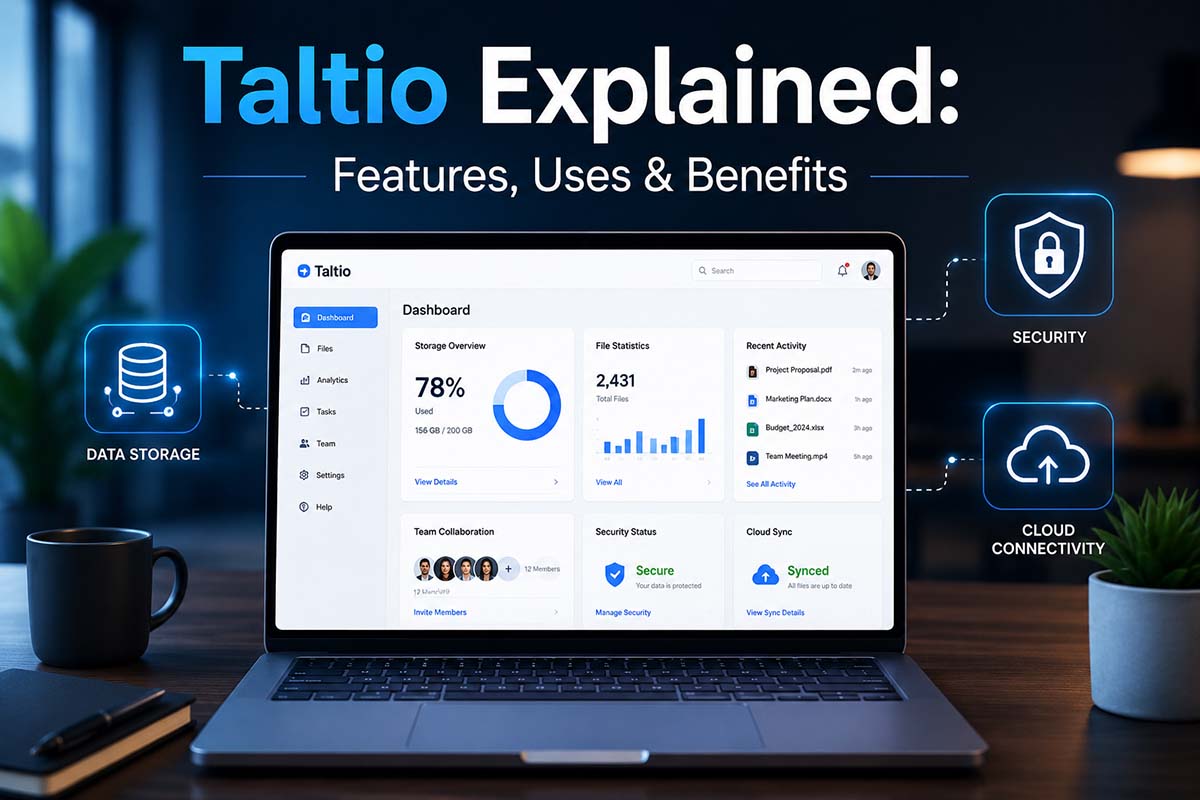
Understanding the core features helps in evaluating how useful it can be in different scenarios. Some of the commonly associated features include:
1. Centralized Data Organization
It systems are designed to keep information structured in one place, reducing confusion and duplication.
2. Easy Accessibility
Users can quickly access stored data without navigating complex systems.
3. Improved Workflow Efficiency
By simplifying processes, it helps individuals and businesses save time and reduce manual effort.
4. Secure Information Handling
Modern digital tools similar to Taltio often focus on maintaining strong data protection and privacy.
5. Scalability
Such systems can grow with user needs, making them suitable for both small and large-scale operations.
How Taltio Works
The working principle behind Taltio revolves around structured digital organization. It typically functions by collecting, categorizing, and storing data in an organized system that can be accessed easily when needed.
Here’s a simplified breakdown:
- Data is collected from different sources
- Information is categorized based on type or usage
- Stored in a structured environment
- Retrieved quickly through search or filters
- Managed efficiently with minimal manual effort
This system reduces clutter and improves productivity for users across different fields.
Uses of Taltio
Taltio-like systems can be applied in several areas, including:
Business Management
Companies use structured systems to handle customer data, financial records, and internal workflows.
Personal Organization
Individuals can manage documents, notes, and digital files more effectively.
Education Sector
Schools and institutions can organize academic records and learning materials.
Digital Storage Solutions
It supports cloud-based or hybrid storage models for secure access anytime.
Benefits
The growing popularity of such systems comes from their practical advantages:
- Saves time through automation and structure
- Reduces data confusion and duplication
- Improves decision-making with better organization
- Enhances productivity in daily operations
- Offers flexibility for different users and industries
These benefits make it a valuable concept in the modern digital ecosystem.
Importance of Digital Organization Tools
In the age of information overload, managing data efficiently has become a necessity. According to insights from technology-focused platforms like IBM, structured data management improves business efficiency and reduces operational errors.
Reference: https://www.ibm.com/topics/data-management
Tools and systems similar to Taltio contribute to this transformation by helping users maintain clarity and control over their digital environment.
Challenges and Limitations
While useful, systems like Taltio may also face certain limitations:
- Requires initial learning for new users
- May depend on internet or digital infrastructure
- Needs regular updates for optimal performance
- Data migration from older systems can be complex
Understanding these challenges helps users prepare better before adopting such solutions.
Future of Taltio and Similar Systems
The future of digital organization tools looks promising. With advancements in artificial intelligence, cloud computing, and automation, systems like Taltio are expected to become more intelligent and user-friendly.
Future improvements may include:
- AI-based data sorting
- Predictive organization features
- Voice-enabled access systems
- Enhanced security frameworks
These innovations will likely make digital management even more seamless.
FAQs
1. What is Taltio used for?
It is used for organizing, managing, and accessing digital information in a structured way.
2. Is Taltio a software or concept?
It is generally understood as a digital system concept that represents structured data management solutions.
3. Who can use Taltio?
Anyone from individuals to businesses can use similar systems for better organization and productivity.
4. Is Taltio secure?
Most modern systems designed around this concept focus heavily on data security and privacy.
5. Does Taltio require technical knowledge?
Basic understanding is enough, although advanced features may require some learning.
Conclusion
It represents a modern approach to managing digital information in a structured and efficient way. From improving productivity to simplifying data access, it offers valuable benefits for both personal and professional use. As technology continues to evolve, systems like this are becoming increasingly important for staying organized in a digital-first world.
Overall, Taltio is a practical solution concept that supports better digital management and efficiency in everyday life.