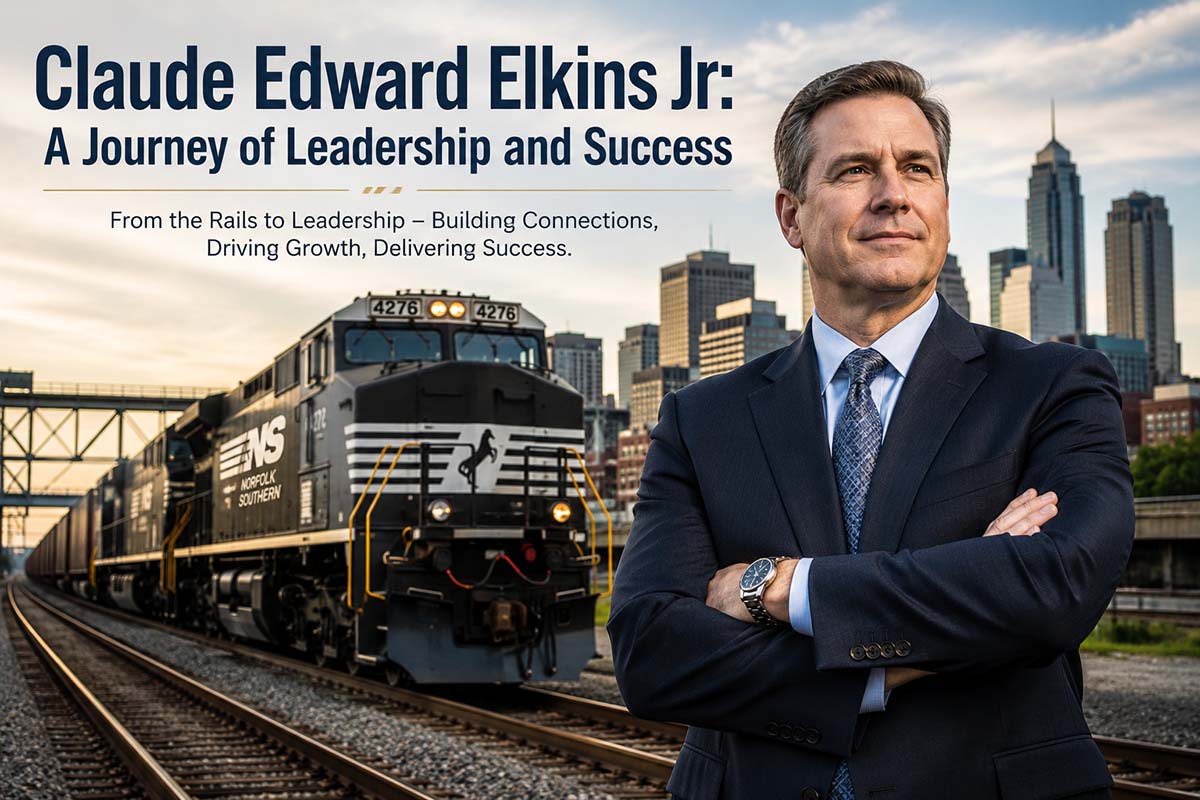
Claude Edward Elkins Jr: A Journey of Leadership and Success
Introduction
Success stories are often built on persistence, adaptability, and a willingness to learn from every stage of a career. Claude Edward Elkins Jr represents these qualities through a remarkable professional journey that took him from frontline railroad operations to executive leadership at one of America’s largest freight transportation companies. His career demonstrates how practical experience, continuous education, and disciplined leadership can create long-term success in a highly competitive industry.
Quick Information Table
| Information | Details |
|---|---|
| Full Name | Claude Edward Elkins Jr |
| Common Professional Name | Ed Elkins |
| Industry | Transportation & Freight Rail |
| Nationality | American |
| Current Role | Executive Vice President and Chief Commercial Officer |
| Company | Norfolk Southern Corporation |
| First Railroad Position | Road Brakeman |
| Railroad Career Start | 1988 |
| Military Service | United States Marine Corps |
| Undergraduate Degree | Bachelor’s Degree in English |
| Graduate Degree | MBA with concentration in Port and Maritime Economics |
| Leadership Focus | Commercial Strategy, Transportation, Logistics |
Early Life and Foundations of Leadership
Many successful executives develop leadership qualities long before entering the corporate world. Growing up in Southwest Virginia, Elkins was exposed to communities closely connected to the railroad industry. The region’s strong work ethic and emphasis on responsibility helped shape his professional mindset.
Before entering the transportation sector, he served in the United States Marine Corps. Military service played a significant role in developing qualities that would later define his leadership style:
- Discipline
- Accountability
- Teamwork
- Strategic thinking
- Decision-making under pressure
These experiences provided a foundation that would prove valuable throughout his career.
Education and Professional Development
One factor that distinguishes many successful business leaders is a commitment to lifelong learning.
Elkins earned a bachelor’s degree in English, which strengthened his communication and analytical abilities. While many transportation executives come from engineering or finance backgrounds, his education provided unique strengths in communication, negotiation, and problem-solving.
Recognizing the importance of business expertise, he later completed an MBA focused on Port and Maritime Economics. This specialized education expanded his understanding of:
- Global trade
- Logistics systems
- Supply chain management
- Transportation economics
- Commercial strategy
The combination of operational experience and formal business education became a significant advantage throughout his leadership journey.
Starting From the Ground Up
One of the most remarkable aspects of his career is how it began.
In 1988, he joined Norfolk Southern as a road brakeman. This position is among the most physically demanding roles within railroad operations and requires close attention to safety, teamwork, and operational efficiency.
Unlike executives who enter organizations through management programs, he learned the business directly from frontline experience.
During his early years, he worked in several operational positions, including:
- Brakeman
- Conductor
- Locomotive engineer
- Relief yardmaster
These roles provided firsthand knowledge of railroad operations and gave him an understanding of the challenges faced by employees throughout the organization.
Learning the Value of Operational Excellence
Working in railroad operations requires precision, safety awareness, and collaboration.
These experiences taught important leadership lessons:
Safety Comes First
Rail transportation involves complex systems where mistakes can have serious consequences.
Early operational roles reinforced the importance of:
- Risk management
- Compliance
- Attention to detail
- Consistent execution
Teamwork Drives Success
Railroads operate through coordination between many departments.
Frontline experience helped him understand how success depends on effective collaboration between:
- Train crews
- Dispatchers
- Maintenance teams
- Yard operations
- Management personnel
Leadership Is Earned
Employees often respect leaders who understand their daily challenges. Having worked directly in operational roles gave him credibility that would later support his leadership effectiveness.
Transition Into Commercial Leadership
After years in operations, Elkins made a strategic shift into commercial and marketing roles.
This transition expanded his perspective beyond railroad operations and introduced him to customer relationships, business development, and market strategy.
Intermodal transportation became a significant area of focus. Intermodal systems combine multiple transportation methods, such as rail and trucking, to improve efficiency and reduce costs.
His responsibilities included:
- Customer engagement
- Transportation solutions
- Pricing strategy
- Business development
- Service optimization
This period demonstrated his ability to adapt and succeed in entirely different areas of the organization.
Rising Through Executive Positions
Career growth rarely happens overnight.
Over time, his expertise led to increasingly senior leadership positions.
Group Vice President of Chemicals Marketing
In this role, he oversaw transportation services for chemical products, one of the most regulated and safety-sensitive sectors within freight transportation.
Responsibilities included:
- Customer relationship management
- Commercial planning
- Regulatory compliance
- Market development
Vice President of Industrial Products
His next major leadership position involved managing transportation services for industries such as:
- Metals
- Construction materials
- Forest products
These sectors play a vital role in economic development and infrastructure projects across the United States.
Executive Vice President and Chief Commercial Officer
A major milestone arrived in 2021 when Elkins was appointed Executive Vice President and Chief Commercial Officer at Norfolk Southern.
This position placed him among the company’s top leadership team and gave him responsibility for multiple business segments.
Areas under his leadership include:
- Intermodal transportation
- Automotive logistics
- Industrial products
- Customer logistics
- Real estate initiatives
- Field sales
The role requires balancing customer needs, operational realities, financial performance, and long-term strategic growth.
Leadership Philosophy
Successful leaders often develop consistent principles that guide their decisions.
Several themes frequently appear when discussing his leadership approach.
Practical Decision-Making
Because of his operational background, decisions are often grounded in real-world experience rather than purely theoretical analysis.
Respect for Employees
Having worked on the front lines, he understands the importance of listening to employees and valuing their expertise.
Long-Term Thinking
Rather than focusing solely on short-term gains, effective transportation leadership requires balancing:
- Customer satisfaction
- Network reliability
- Safety performance
- Sustainable growth
Continuous Improvement
Strong organizations evolve by learning and adapting. Throughout his career, professional growth and education have remained central themes.
Lessons Business Leaders Can Learn
His career offers several valuable lessons for professionals across industries.
Start Where Opportunities Exist
Entry-level roles can become stepping stones to major leadership positions when approached with dedication and professionalism.
Never Stop Learning
Combining experience with education creates powerful opportunities for career growth.
Build Credibility Through Action
Leadership becomes more effective when supported by firsthand knowledge and practical understanding.
Embrace Change
Moving from operations into commercial leadership required adaptability and a willingness to learn new skills.
Focus on People
Organizations succeed when leaders value teamwork, communication, and employee development.
The Importance of Freight Transportation Leadership
The freight rail industry plays a critical role in economic development.
Rail transportation supports:
- Manufacturing
- Agriculture
- Energy production
- Consumer goods distribution
- International trade
According to the official Association of American Railroads, freight rail remains one of the most efficient methods of moving large volumes of goods across the United States. For additional industry information, visit:
Leadership within this sector directly influences supply chains, business operations, and economic growth nationwide.
Industry Impact and Legacy
Throughout his career, Elkins has demonstrated that operational experience and executive leadership can successfully coexist.
His progression from frontline railroad work to executive management serves as an example of career development built on:
- Hard work
- Education
- Adaptability
- Strategic thinking
- Commitment to excellence
For aspiring professionals, his story highlights the value of building expertise at every level of an organization before pursuing leadership responsibilities.
Frequently Asked Questions
Who is Claude Edward Elkins Jr?
He is an American railroad executive who serves as Executive Vice President and Chief Commercial Officer at Norfolk Southern Corporation.
What was his first railroad job?
He began his railroad career as a road brakeman in 1988.
Did he serve in the military?
Yes. Before his railroad career, he served in the United States Marine Corps.
What education does he have?
He earned a bachelor’s degree in English and later completed an MBA with a focus on Port and Maritime Economics.
Why is his career notable?
His journey from frontline railroad operations to executive leadership is considered an uncommon and inspiring example of professional advancement within the transportation industry.
Conclusion
The career of Claude Edward Elkins Jr demonstrates that leadership is not simply about titles but about experience, discipline, learning, and the ability to inspire others. From working as a railroad brakeman to leading commercial strategy for a major transportation company, his journey reflects the power of perseverance and professional growth. His story continues to serve as a valuable example for business professionals seeking to build meaningful and lasting careers.